Plagiarism Checker 100% Free Plagiarism Detector Online
Plagiarism Checker 100% Free Plagiarism Detector Online
It’s two o’clock in the morning. The only sounds are the gentle hum of your laptop and the distant bark of a neighbourhood dog. You're staring at the final, blinking cursor on the last paragraph of a huge essay, a critical report, or that blog post you’ve been pouring your heart into. Your eyes are blurry, you’ve had way too much coffee, and you have read your own words so many times that they’ve started to lose all meaning. You’ve spent days, maybe even weeks, researching, writing, and editing this thing. It is your work. You know it is.
But then, just as you get ready to hit that final ‘submit’ or ‘publish’ button, a tiny, nagging, and deeply anxious voice whispers in the back of your mind: "Is this all my work? Did I remember to cite that one source correctly? Is that one sentence a little too close to that article I read last week?" It’s the modern writer's anxiety, a legitimate fear that in a world overflowing with information, we might have accidentally, unintentionally, crossed a very important line. Well, today we’re going to talk about the simple, powerful, and completely free tool that can silence that anxious voice for good and give you complete peace of mind.
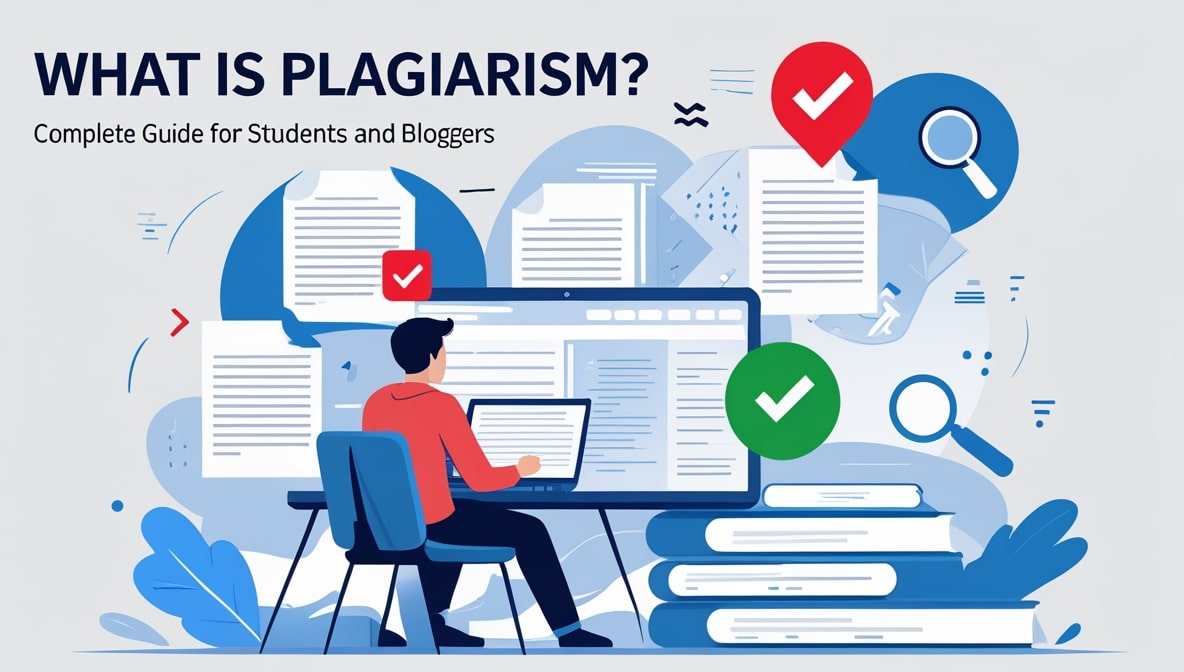
Let's Be Clear: What is Plagiarism, Anyway?
When we hear the word "plagiarism," our minds often jump to a very specific and sinister image: someone deliberately and maliciously copying and pasting another person's work and trying to pass it off as their own. And sure, that kind of academic dishonesty and outright theft definitely happens. But the far, far more common type of plagiarism, the kind that can trip up even the most honest and hardworking students and writers, is accidental plagiarism. It’s when you paraphrase a source a little too closely without realizing it.
It’s when you use a specific, unique phrase from your research that has stuck in your head. It’s when you simply forget to add a citation for a statistic you jotted down in your notes. It’s not about having bad intentions; it’s about a simple, human mistake that can, unfortunately, have very big and very serious consequences.
The High Stakes of Originality in 2025
And make no mistake, the consequences are serious. In the academic world, from a local college here in Colombo to the most prestigious universities in the world, academic integrity is the absolute foundation of learning. An accusation of plagiarism, even if it was accidental, can lead to a failing grade, suspension, or even expulsion. It’s a risk that no student can afford to take. For professional writers, journalists, and bloggers, your reputation for originality is everything. It’s the currency of your career.
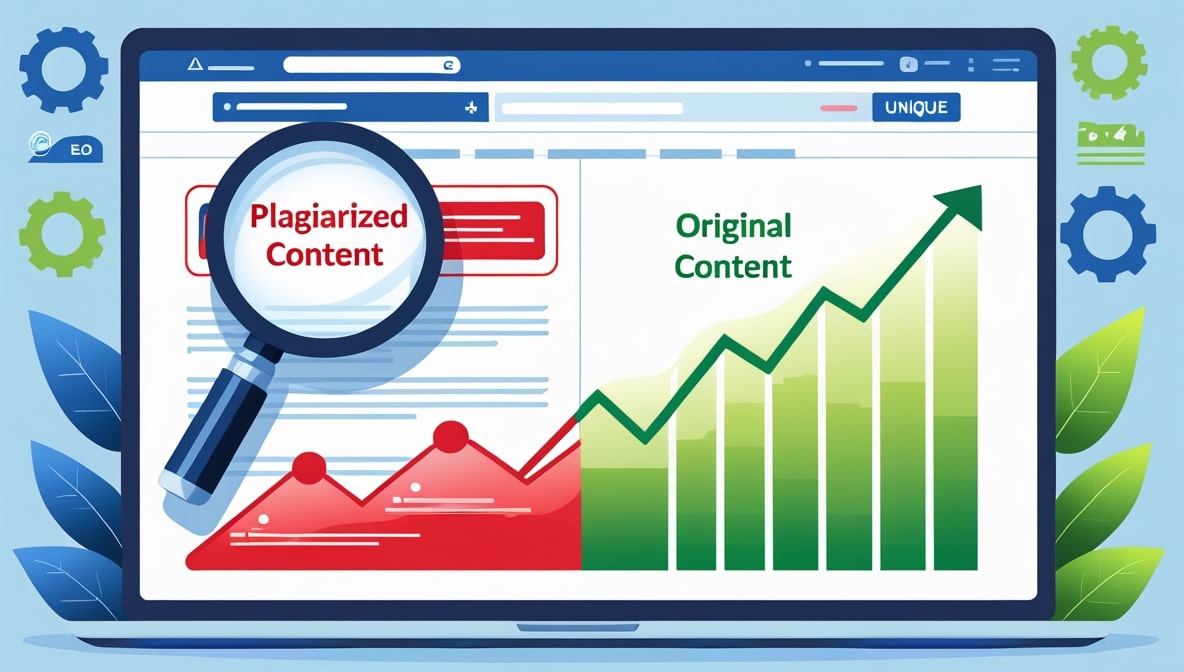
And for the millions of us who own and operate websites, there’s another big boss to please: Google. Search engines are incredibly smart, and they actively penalize websites that have duplicate or copied content. So, ensuring the originality of your work isn't just an ethical issue; for many of us, it's a critical technical and professional one as well.
Your Free, Digital Safety Net Has Arrived
So how in the world do you protect yourself from this risk, especially the accidental kind? You could, of course, re-read your work a dozen times, but your brain has a funny way of seeing what it thinks it wrote, not what is actually on the page. You could manually search for a few of your sentences on Google, but that’s an incredibly slow and inefficient process. This is where a modern, powerful, and intelligent online plagiarism checker becomes an absolutely essential tool for any serious writer. I want you to think of a site like plagiarism-checker.free not as a police officer trying to catch you doing something wrong, but as your personal, helpful, and completely free proofreading assistant. It is your final safety check, your digital safety net, before you show your important work to the rest of the world.
How Does This Digital Detective Actually Work Its Magic?
The technology behind a good plagiarism detector is pretty amazing, but the core concept is actually quite simple to understand. When you copy and paste your text into the checker, the software’s intelligent algorithm gets to work. It breaks down your text into small, unique phrases and sentences. It then sends those phrases out across the vast, endless ocean of the internet, comparing them against a colossal database of literally billions of web pages, academic journals, news articles, and online publications.
It’s like having a super-fast, super-smart, and incredibly well-read librarian who can read your entire paper in a matter of seconds and then instantly compare it to almost every other book, article, and website in the entire world to see if any of the phrasing matches up too closely.
Let's Do a Quick Check-Up: A Simple and Reassuring Walkthrough
The best part about these modern tools is how wonderfully simple and straightforward they are to use. You don't need to be a tech expert at all. You just go to the website. You’ll be greeted by a big, friendly, and inviting text box. You simply copy the text from your essay, your article, your blog post, or your report, and you paste it right into that box. You click the big, clear 'Check Plagiarism' button, and you just let the tool do its incredible work.
It will take a few moments as its digital detectives scour the internet. When it’s done, it will give you a simple and easy-to-understand report, usually with an overall percentage of uniqueness and a clear, highlighted breakdown of any specific phrases or sentences that it found a potential match for somewhere else online.
Understanding Your Report: A Match Isn't a Conviction
This is the most important part of the entire process, and the part where you need to take a deep breath. If the tool comes back and highlights a sentence or two in your work, do not panic! It does not automatically mean that you have plagiarized. It is not a judgment; it is simply a piece of information. It is a helpful signal for you to go and manually review that specific section of your text. Is it a common, everyday phrase that a lot of people use? The tool might flag that, and you can safely ignore it. Is it a direct quote from a source that you simply forgot to put inside quotation marks and add a citation for? That's an incredibly easy fix.
Or, and this is the most common scenario for accidental plagiarism, is it a sentence where your own attempt at paraphrasing is still a little bit too close to the original source's wording? Now you know exactly which sentence you need to go back and rewrite to make it truly your own.
A Real-Life Story: The University of Colombo Final Year
Let’s imagine a final-year student at the University of Colombo. She’s just put the finishing touches on her big dissertation. She is completely and utterly exhausted, but she is also incredibly proud. She knows that this is her own work, her own arguments, her own analysis. But she has also read and synthesized information from hundreds of different academic articles and books over the past year. She’s terrified that a specific, well-worded phrase from a source might have accidentally stuck in her head and made its way onto the page. So, before she submits, she pastes her final draft into a free online plagiarism detector.
The report comes back 98% unique, but it flags two specific sentences in her literature review chapter. She looks at them closely and realizes that, yes, they are way too close to the original wording of a key academic text she was reading. With a huge, profound sigh of relief, she carefully rewrites those two sentences, makes sure the source is cited properly, and then she submits her paper with 100% complete and total confidence. That peace of mind is absolutely priceless.
This incredible tool isn't just for students, of course. For absolutely anyone who publishes any kind of content online, originality is the name of the game. If you run a blog or you manage a business website right here in Colombo, you need to be absolutely sure that the content you are publishing is unique.
If you hire freelance writers to help you with your content, a plagiarism checker is an essential tool for verifying that the work they are submitting is their own original work before you publish it. It’s a simple, professional step that protects your website from potential SEO penalties and ensures the ongoing integrity and reputation of your brand.
In our modern, information-rich world, where we are constantly reading, researching, synthesizing, and building upon the ideas of others, accidental plagiarism is a very real risk for even the most honest and hardworking writers. It’s not about an intent to cheat; it’s a natural byproduct of the complexity of the modern creative and academic process. A good, user-friendly plagiarism checker acknowledges this reality. It is a supportive tool, not a punitive one. A free, reliable, and easily accessible plagiarism detector like plagiarism-checker.free is an absolutely essential part of the modern writer’s toolkit. It’s the final check, the digital proofreader, the helpful and reassuring assistant that gives you the one thing that every single creator needs before they share their work with the world: absolute and total confidence.